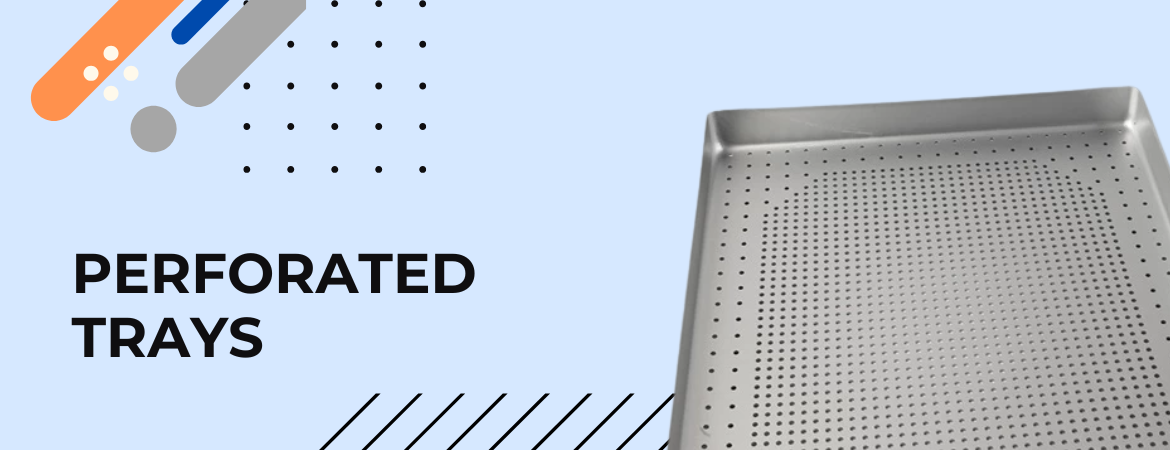
Tray dryers are commonly used in industries like pharmaceuticals, food processing, and chemicals to remove moisture from materials. One simple but highly effective design feature that boosts their efficiency is the use of perforated trays.
Perforated trays allow hot air to pass through both the top and bottom of the material, unlike solid trays that limit airflow to the surface. This ensures even exposure to heat, speeding up the drying process and improving consistency.
Better airflow means more uniform temperature and moisture distribution. This reduces the risk of over-drying or under-drying certain areas, leading to a higher-quality final product—especially important in applications where precision is key.
The perforations increase the surface area in contact with the hot air, improving heat transfer. This boosts the evaporation rate of moisture, shortens drying time, and reduces energy consumption.
Because drying is more even, there’s less need to stir or reposition materials. This reduces manual handling and the risk of contamination, which is particularly valuable in food and pharmaceutical applications.
In short, perforated trays enhance tray dryer performance by promoting better airflow, faster and more uniform drying, and greater energy efficiency—all with minimal modification.